
 CRO
 EN
How to Reduce Salon No-Shows: What the 2026 Data Tells Us
Missed appointments can disrupt your schedule and affect your business. Here is what recent industry data tells us, along with seven practical ways to keep your calendar running more smoothly.
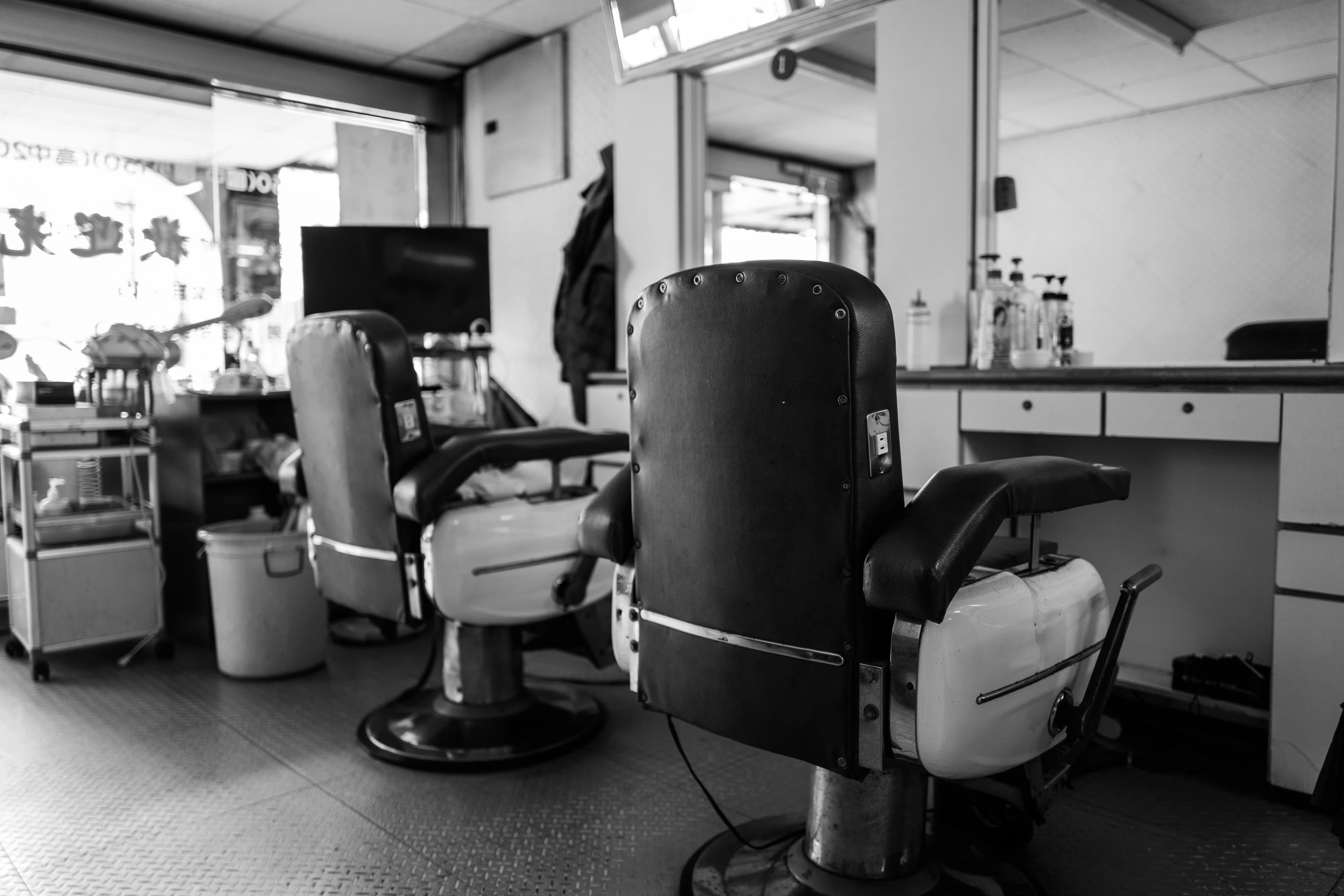
An empty salon chair. A reserved appointment slot. A client who never arrives.
For salon owners and independent service professionals, a missed appointment is more than an inconvenience. It is time that was set aside for a customer, often with little opportunity to fill the gap at the last minute.
Occasional no-shows are part of running an appointment-based business, but that does not mean you have to simply accept them. Clearer communication, consistent booking practices, and a well-organized schedule can all help you respond more effectively.
Let us look at what recent industry data shows and explore seven practical steps that small businesses can take.
What Exactly Counts as a No-Show?
A no-show occurs when a client fails to attend a scheduled appointment without notifying the business in advance. It is different from a cancellation.
When someone cancels early, you may still have time to offer the slot to another client or reorganize the schedule. With a no-show, you often discover the problem only when the client does not arrive.
Late cancellations can create similar disruptions, but they are worth tracking separately. The distinction helps you understand where your scheduling process needs improvement.
How Common Are No-Shows in Salons?
According to Zenoti’s 2026 Beauty & Wellness Benchmark data, no-show rates differ across beauty and wellness businesses. The figures are based on 2025 performance data from businesses using Zenoti’s platform in North America.
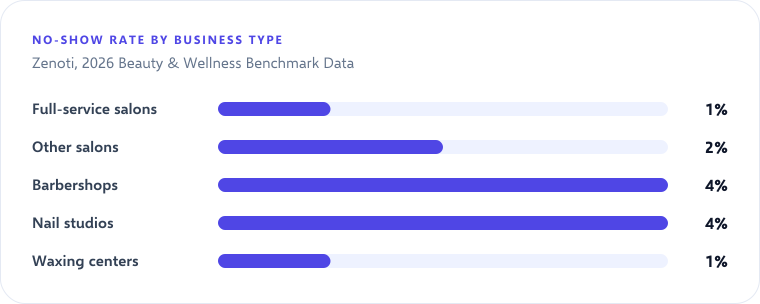
These are useful industry benchmarks, not universal averages. Individual businesses may see higher or lower rates depending on their services, clientele, booking volume, and policies.
Even a small percentage can matter when you manage hundreds of appointments each month.
How Much Can Missed Appointments Cost?
Imagine a salon that schedules 200 appointments a month, with an average service price of €45. If 2% of those appointments become no-shows, that means four missed visits and €180 in potentially unfulfilled bookings during the month.
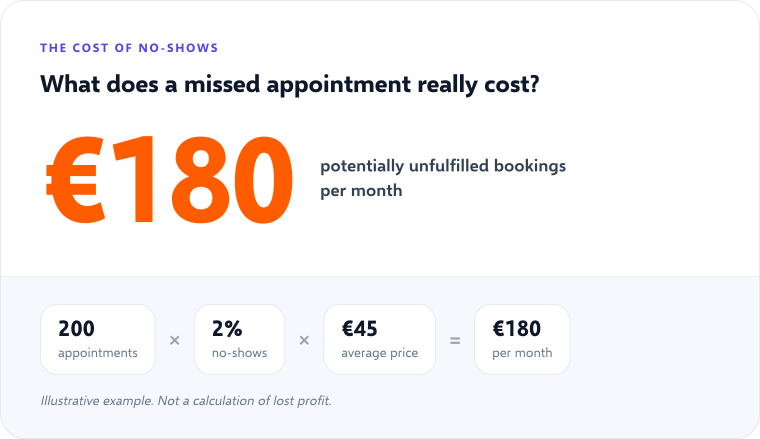
If the same pattern continued for twelve months, the equivalent would be €2,160 in booked service value.
This is an illustrative calculation, not a measure of lost profit. The actual financial impact depends on whether a slot can be filled, whether a fee applies, and what costs are avoided when a service is not delivered.
The disruption can also extend beyond revenue. Unexpected gaps affect staff planning, make the day less predictable, and create time that may be difficult to use productively.
Why Do Clients Miss Appointments?
There is no single explanation. Some clients simply forget. Others confuse the date or time, make conflicting plans, or experience an unexpected change in their schedule. A client may also realize they cannot attend but fail to contact the business in time.
Rather than blaming clients, it is more useful to ask a practical question:
How can we make appointments easier to remember and changes easier to communicate?
7 Practical Ways to Reduce Salon No-Shows
1. Make appointment details clear
Start with accurate booking information. Make sure clients know their appointment date, time, service, and location. Include the staff member when that is relevant.
Clear details help customers understand what they have booked and allow your team to work from the same information. It is a simple foundation for reliable scheduling.
2. Send timely appointment reminders
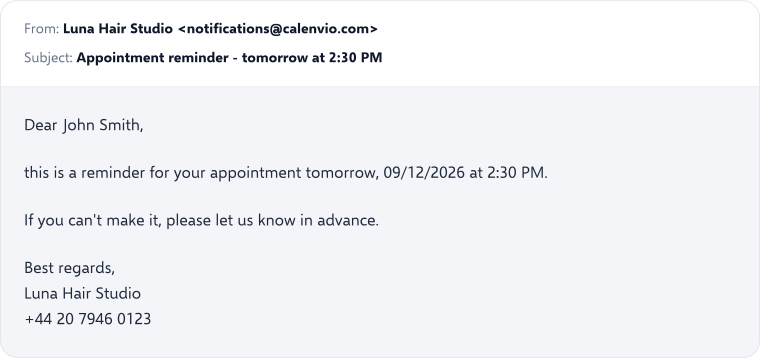
A reminder gives clients an opportunity to double-check their plans before the scheduled visit. An email around 24 hours beforehand is a practical starting point, particularly if it gives people enough time to contact you when plans have changed.
Research on appointment reminders is encouraging, although most published studies come from healthcare rather than salons. A 2026 quasi-experimental study by Santillan and Giunta examined 272,331 urology appointments and found an association between an email reminder system, which included an easy cancellation link, and lower non-attendance.
A separate 2016 systematic review in BMJ Open found that electronic text notifications improved attendance in healthcare settings. That review largely addresses text notifications and should not be read as evidence that email performs identically.
These results do not tell us how much salon no-shows would fall, or whether 24 hours is the ideal timing for every business. They do support the value of testing timely communication as part of a consistent booking process.
A useful reminder should be short, friendly, and specific: confirm the date and time, name the service, and provide a clear way to contact the business if something has changed.
3. Make cancellations easy to communicate
An early cancellation is often easier to manage than an unexpected empty chair. Make sure clients know how to reach you if they can no longer attend. A visible phone number or contact email may be enough for a small business.
The easier it is to report a change, the more opportunity you have to reorganize the schedule or offer the appointment to someone else.
4. Keep client information organized
Managing appointments becomes harder when client details are scattered across notebooks, messages, spreadsheets, and separate calendars. Keeping contact details and appointment history together helps your team prepare for upcoming visits.
If a client has missed several appointments, for example, you might choose to confirm their next booking personally. The point is not to label people as unreliable, but to improve communication where it may be needed.
5. Establish a fair cancellation policy
Explain how much notice your business prefers and how clients should contact you to cancel or reschedule. If you use deposits or cancellation fees for longer or higher-value services, state the terms before the booking is made and check that they comply with applicable rules.
A fair, clearly communicated policy can set expectations without making clients feel unwelcome.
6. Have a plan for unexpected openings
Some cancellations and no-shows will still happen. Keep a simple list of clients who would welcome an earlier appointment or a popular time slot. When space opens up, you may be able to contact them quickly.
You do not need a complicated process to get started. A reliable record of requests and a clear view of the calendar can already help.
7. Track your own no-show rate
Industry benchmarks offer context, but your own data is what should guide decisions. A simple calculation is:
No-show rate = (Missed appointments ÷ appointments due to take place) × 100
For example, if five out of 100 appointments that were due to take place become no-shows, the rate is 5%. Use the same method each month and track cancellations separately, so you can see whether the pattern changes.
Are certain days more affected? Are longer services more likely to have missed appointments? Do clients who book far in advance need more communication? A few months of consistent tracking can help you decide which changes are worth testing.
How Calenvio Helps Keep Appointments Organized
For independent professionals and small service businesses, managing appointments, client information, employees, and reminders can quickly become time-consuming. Having that information in one place can make everyday work simpler.
Calenvio is a web-based appointment scheduling and client management platform built for salons and service businesses. It brings appointment calendars, client records, staff, and services together in one interface.
Calenvio also includes unlimited automated email reminders sent 24 hours before scheduled appointments when email notifications are enabled with the client’s consent. These reminders are included in the subscription without additional sending fees or quantity limits.
Instead of writing each reminder manually, businesses can make appointment communication a consistent part of their routine. Reminders cannot guarantee attendance, but they can remove a repetitive administrative task.
A Better Schedule Starts With Small Improvements
Reducing no-shows is not about achieving a perfect attendance rate. It is about making bookings clear, helping clients remember their appointments, communicating changes early, and understanding what happens in your own business.
Start with accurate booking details, timely reminders, a straightforward cancellation process, and regular tracking. Small improvements can help make your working day more predictable.
Make Appointment Management Simpler With Calenvio
Bring your appointments, clients, staff, and services together in one place.
Try Calenvio free for 30 days, with no credit card required.
Explore Calenvio